


Blog
Why Ceiling Fans Deserve a Place in Your Customer’s Cooling Plans

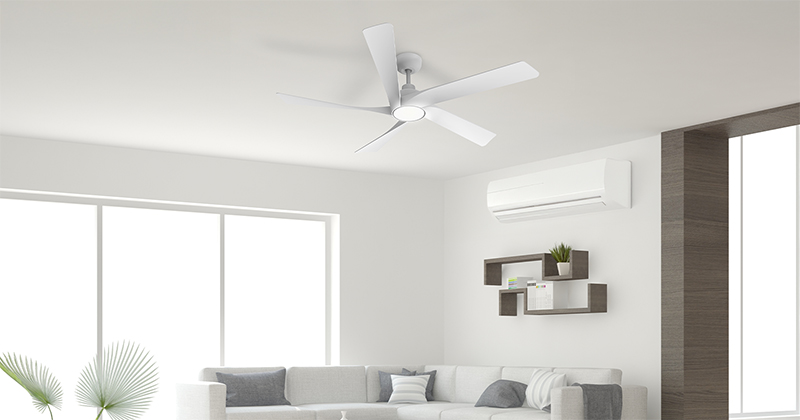
With air conditioning sales growing and solar panels and batteries booming, you could be forgiven for wondering about the humble ceiling fan. Nonetheless, ceiling fans are still in strong demand from customers and builders.
In this article we will take a look at the benefits of ceiling fans compared with their icy counterparts, why they still have a role in a modern solar home, and why they remain an important product in any sparky’s arsenal.
Energy Efficiency That Saves Customers Money
Around the country, households are responding to high energy prices by looking for savings, and modern ceiling fans have a part to play.
Despite sales of air conditioners growing, one survey showed up to two thirds of people don’t use them as much as they would like due to the cost. Modern DC ceiling fans, by comparison, use roughly the same amount of power as an incandescent light bulb—about 30 to 40 watts—while air conditioners are measured by the kilowatt! The difference this can make on the quarterly energy bill is no joke.

At an average electricity price of 30 cents per kWh, running a DC ceiling fan for eight hours a day costs just a few dollars per month or around $50 per year. An air conditioner, on the other hand, typically draws between 0.5kWh to 2.5kWh or more, and yearly bills for similar usage can range from several hundred dollars into the thousands.
| Energy Use | Approximate Annual Cost | |
|---|---|---|
| Air Conditioner | 0.5 - 2.5 kWh | $500 to >$1000 |
| DC Ceiling Fan | 15 - 75 W | $50+ |
Fans and Air Conditioning: Better Together
Fans and air conditioners cool us down in different ways. While air conditioners actively cool the air, fans move air across the skin to take advantage of our body’s natural cooling processes. A gentle breeze can make you feel up to 4 degrees cooler and research from scientists at the Monash and Sydney Universities show fans are still effective in hot and humid conditions up to 39 degrees Celsius.
Smart operators will use ceiling fans to delay turning on air conditioning and then use them alongside A/C, allowing higher thermostat settings to reduce energy consumption without sacrificing comfort. In winter, fans can be switched to reverse rotation to help circulate warm air from heaters without creating a strong breeze, to improve heating.
Bottom line? Ceiling fans are an energy-efficient partner that boost the effectiveness and efficiency of air conditioners and heaters.
Why Sparkies Love Ceiling Fans (and Customers Do Too)
Other than their top-tier efficiency and cooling comfort, ceiling fans offer practical benefits that make them a smart choice for sparkies and customers alike.
They’re much more affordable to purchase and install than air conditioning systems, and installation is generally faster and easier.
Ceiling fans can be fitted in more locations, and many homes have ceiling fans in bedrooms, living spaces, and even outdoor spaces like verandas. While ducted A/C systems can deliver cooling throughout a home, they’re not an option for all homes and budgets and come with their own challenges. Ceiling fans, on the other hand, are an affordable and versatile option for any home, and if issues arise, they’re usually straightforward to troubleshoot and repair.
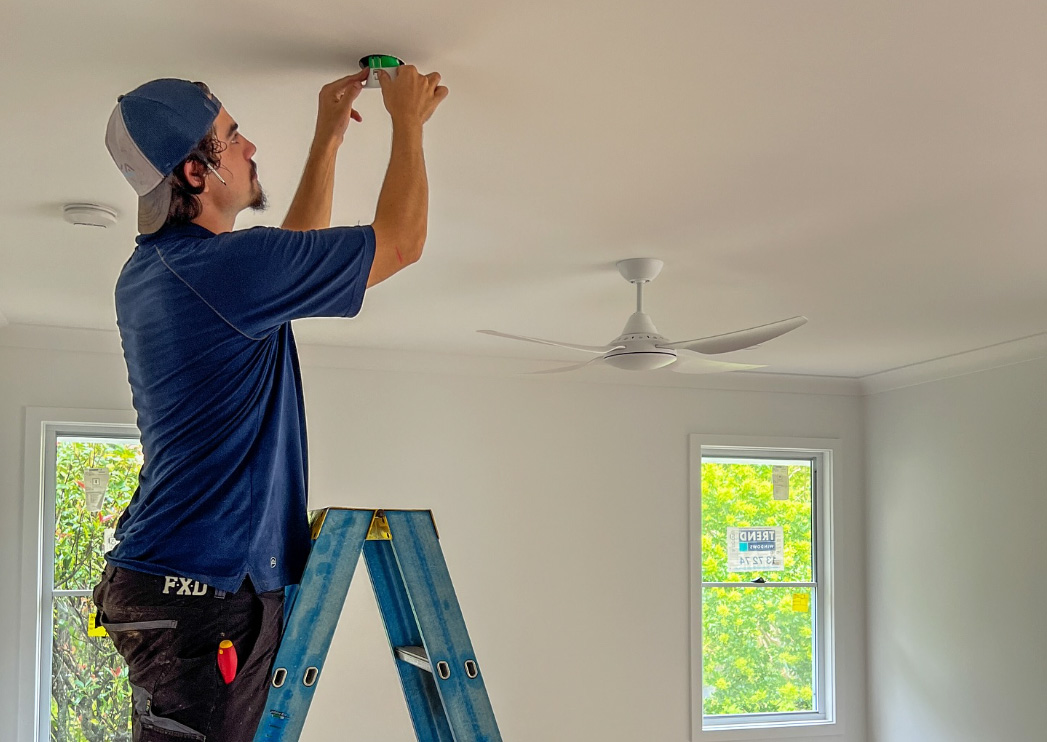
Ceiling fans with integrated lights allow electricians to reduce the number of fixtures in a room and simplify installations. Modern DC ceiling fans are more efficient and quieter than their AC counterparts and are available with convenient wall controllers or remotes.
Why Solar and Battery Homes Still Need Ceiling Fans
Solar power is now installed on around 30 percent of homes Australia-wide. On bright days, a rooftop solar system can offset some or all of the energy use of an air conditioner, and with batteries becoming more common, extra energy can be stored for evening use.
But solar isn’t a silver-bullet solution. A range of factors can limit energy production, including system size, weather conditions and local climate, cleanliness of panels, and surrounding trees and buildings. A solar panel is also little help to a hot building in the early evening when the sun goes down. On the consumption side, average daily energy usage can exceed what the system generates, especially if multiple air conditioners and appliances are involved.
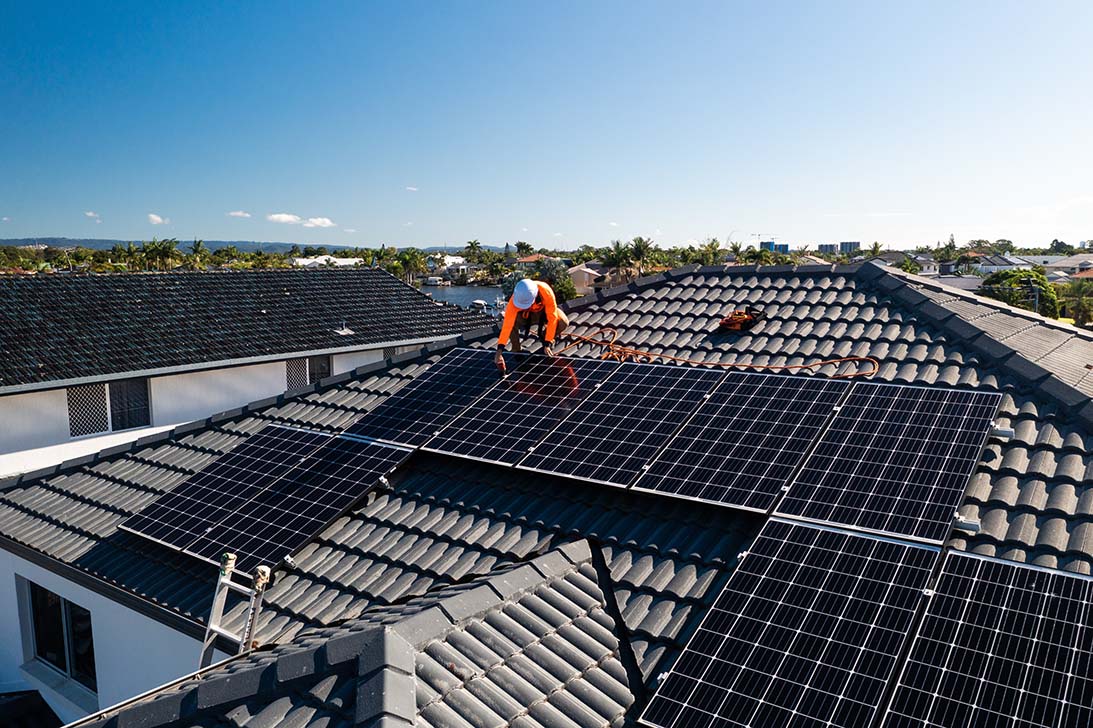
It can be a balancing act for owners as they use high-energy appliances like dishwashers, washing machines, and air conditioning during the daytime. Ceiling fans can be a useful tool to stretch solar power further, keeping homes cool into the evening and as an efficient fallback on cloudy days.
For those with large solar systems that generate excess capacity and a battery system to store it, ceiling fans can still help in ensuring that stored energy goes further, reducing how often batteries cycle, potentially extending their lifespan. Owners investing in solar systems are likely already considering energy efficiency and are keen to reach their payback point, when the financial savings surpass installation costs, so ceiling fans are a common-sense option in maximising both comfort and efficiency.
Key Takeaways: Why Fans Deserve a Spot in Every Cooling Plan
Ceiling fans are a highly effective tool for staying cool, whether used on their own or alongside an air conditioner. Their low cost to buy, install, and run make them an ideal choice for reducing power bills and carbon impact. Fans are also remarkably versatile. They can be installed quickly in multiple rooms, be used inside or out, and provide benefits in both summer and winter.
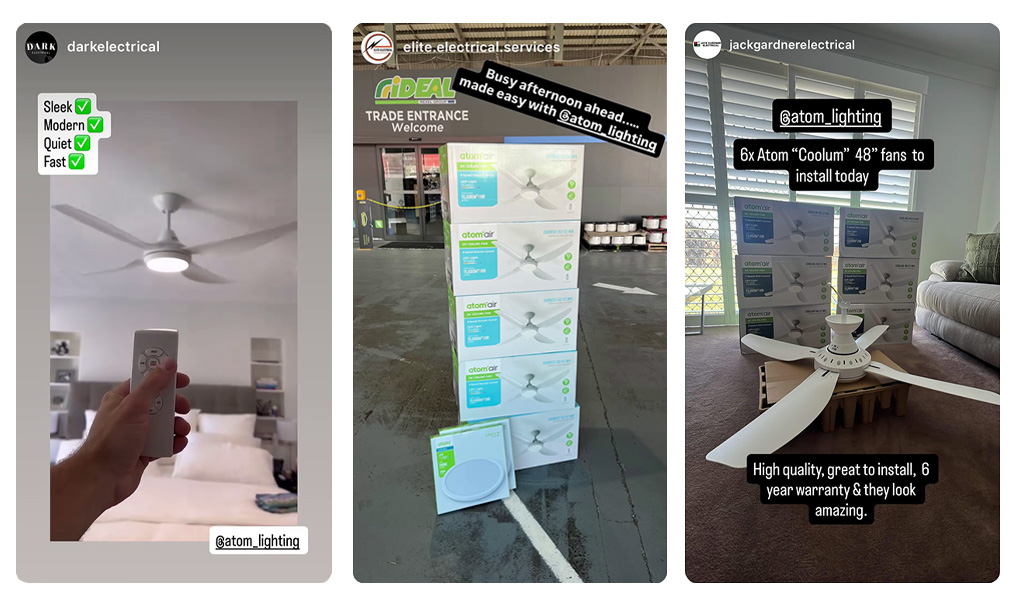
For electricians, ceiling fans are a popular, practical product. They offer home and business owners a common-sense way to keep power bills under control, enhance comfort, and get the most out of solar energy systems.
Related products